[Valid Atom 1.0]

domingo, 12 de julho de 2009

Andréia Albertini, el travesti que chantajeó a Ronaldo


Se llamaba André Luiz Ribeiro Albertini, pero su nombre de guerra era Andréia. A sus 22 años era uno de los travestis más conocidos de Brasil, pero no por las dotes artísticas que a otros colegas le llevan a destacar en los locales nocturnos de su São Paulo natal. Su fama le llegó el año pasado por un escándalo que dio la vuelta al mundo y que, durante semanas, puso en jaque nada menos que a Ronaldo -no confundir con Cristiano-, la estrella brasileña de fútbol.

EL MUNDO

EL MUNDO

En abril de 2008, Andréia denunció al fútbolista, acusándole de que éste la había llevado a un hotel de encuentros de Río de Janeiro junto a otros dos homosexuales, y que después se negó a pagarles los servicios sexuales. Además, sostuvo que los cuatro consumieron drogas y mantuvieron relaciones sexuales.

La noticia no tardó en copar las portadas de la prensa de medio mundo, y los abogados y asesores del entonces jugador del Milan tuvieron que contraatacar con una versión que, en todo caso, acabó de confirmar la fama de juerguista de Ronaldo. Éste reconoció que, mientras se recuperaba en su país de una lesión de rodilla, se llevó a la habitación de un motel a una prostituta y contrató por teléfono a otras dos para montar una orgía. Sin embargo, el jugador siempre sostuvo que nunca imaginó que se tratara en los tres casos de hombres, y que en cuanto lo descubrió, les pagó unos 600 euros sin hacer uso de sus servicios. Ronaldo negó tajantemente el uso de drogas.

Andréia se opuso a aceptar esa suma de dinero y le chantejeó con montarle un escándalo monumental si no le pagaba 30.000 dólares. El travesti cumplió con su amenaza y la noticia salió a la luz, aunque, finalmente, reconoció ante el juez que Ronaldo decía la verdad.

Al parecer, Andréia estaba enferma de sida. Su madre declaró ayer que ha muerto por una neumonía.


Loading...


Sphere: Related Content
26/10/2008 free counters

Estremecedora cogida en el sexto encierro de los Sanfermines


El toro 'Ermitaño' ha corneado a un mozo en el callejón en el sexto encierro. | Iban Aguinaga | Efe

El toro 'Ermitaño' ha corneado a un mozo en el callejón en el sexto encierro. | Iban Aguinaga | Efe

  • El toro 'Ermitaño', de la ganadería de los Miura, ha provocado grave peligro
  • Un mozo ha sufrido una múltiple cornada en el cuello y en el muslo
  • Dos de los heridos en el encierro se encuentran en estado grave

El peligro extremo ha vuelto a Sanfermín. Si el pasado viernes fallecía el joven Daniel Jimeno, hoy el toro 'Ermitaño' ha corneado gravemente a un mozo durante el sexto y penúltimo encierro de Sanfermín.

El encierro ha sido el más largo y peligroso de las fiestas, de cinco minutos de duración, y ha tenido como protagonista a 'Ermitaño', de la ganadería sevillana de los Miura, que ha propinado varias cornadas a lo largo del recorrido.

Este toro ha quedado rezagado desde la curva de Mercaderes y en su trayecto hasta la plaza ha protagonizado los momentos más dramáticos, especialmente en la entrada al callejón de la plaza, donde se ha cebado con un mozo, al que ha corneado y volteado en varias ocasiones.

El joven ha sufrido una múltiple cogida con cornadas en pecho y muslo y está siendo intervenido en estos momentos de una herida grave en el tórax.

Tras el encierro ha habido once heridos, dos de ellos graves, que han sido trasladados al hospital: seis de ellos al hospital de Navarra y otros cinco, al de Virgen del Camino.

'Estamos preocupados'

El portavoz de los servicios sanitarios no ha ocultado la gravedad de la situación: "Estamos preocupados", ha reconocido en TVE. Según su testimonio, la situación es especialmente delicada para el mozo herido en el tórax que fue corneado en el callejón.

Tras el lanzamiento del cohete a las ocho en punto de la mañana precedido de los tradicionales cánticos al santo, los miuras han abandonado los corrales de Santo Domingo hermanados y con tres mansos en cabeza y así han hecho los primeros metros del encierro hasta hacer el primer contacto con los mozos.

Este encuentro de toros y mozos ha tenido lugar sin problemas, aunque ya en este punto un toro se encontraba en cabeza junto a los cabestros por la parte derecha, donde uno de los miuras ha volteado a un corredor, pero ha seguido la marcha junto a sus hermanos.

Todavía agrupada aunque con uno de los astados algo rezagado, han cruzado la plaza del Ayuntamiento sin prestar prácticamente atención a los corredores, como suele ser habitual en esta ganadería, razón por la que es la elegida para los encierros de los domingos debido a la masiva afluencia de corredores en fin de semana.

En la calle Mercaderes, donde uno de los astados ha empitonado a un mozo en el cuello, ha resbalado y caído al suelo uno de los animales, un cárdeno oscuro, y algo más adelante, en la curva de acceso a la calle Estafeta, el choque de uno de los toros contra el vallado ha provocado la caída de tres de los animales.

'Ermitaño' ha quedado rezagado desde la curva de Mercaderes y ha protagonizado momentos dramáticos

A partir de este punto, no sólo la manada se ha roto definitivamente, sino que 'Ermitaño', de 575 kilos, se ha despistado y ha hecho ya el resto de la carrera en solitario, creando numerosos incidentes y escenas de pánico.

Mientras tanto, tres de sus hermanos recorrían la calle Estafeta con cuatro cabestros, seguidos a unos metros de otros dos miuras acompañados por el quinto manso, todos ellos entre una gran multitud de personas, lo que ha hecho que se hayan producido muchas caídas e incluso algunos montones de corredores.

De la misma forma, el grueso de la manada ha seguido por los tramos de Telefónica y el Callejón hasta entrar en la plaza y los chiqueros, mientras el cárdeno rezagado daba lugar a momentos dramáticos al girarse en varias ocasiones y arremeter contra los mozos, que se esforzaban en citar al astado para conducirlo hacia la plaza.

Los momentos de mayor tensión se han producido en los tramos de Telefónica y la entrada al callejón, donde ni pastores ni corredores han podido evitar que 'Ermitaño' se lanzara en repetidas ocasiones contra el vallado y los mozos.

El peor parado ha sido un corredor con el que el astado se ha cebado durante unos momentos dramáticos y al que ha corneado, le ha volteado en el aire después de levantarlo del suelo con los cuernos e incluso ha conseguido llevárselo hacia atrás varios metros, hasta que otros corredores han conseguido retirarlo a rastras.

Mozos y pastores han logrado finalmente con gran esfuerzo que 'Ermitaño' entrara en la arena donde una pareja de dobladores lo han llevado a chiqueros a punta de capote.

La carrera del domingo es una de las más multitudinarias de las fiestas y, por ello, el programa designa habitualmente a los toros de Miura, tradicionalmente nobles y que no suelen dejar muchos heridos a su paso por Pamplona. Sin embargo, hoy ha sido la excepción y los miura han dejado, al menos, cuatro mozos heridos.


Loading...


Sphere: Related Content
26/10/2008 free counters

De Tiananmen a Xinjiang


Un hombre se enfrenta a los tanques en Pekín y una mujer hace lo mismo en Urumqi. | AP | Reuters

Un hombre se enfrenta a los tanques en Pekín y una mujer hace lo mismo en Urumqi. | AP | Reuters

"¡Soltad a nuestros maridos! ¡Liberad a nuestros hijos!". Tursun Gul avanza haciendo equilibrio con la muleta. La mano izquierda, en alto y con el puño cerrado, puntúa cada una de sus súplicas. En solitario, la mujer vestida de negro planta cara a una fila de soldados y tanquetas antidisturbios. Pide que le devuelvan a su marido y cuatro hermanos, arrestados poco después del festín de sangre y destrucción que se dieron un buen grupo de uigures en las calles de Urumqi.

A los soldados, que se cuidan mucho de reprimir la protesta, no les queda sino retroceder ante el sollozo de una esposa y hermana que no entiende por qué se han llevado a los suyos. "Pasé miedo, porque estaban armados. Pero algo en mi interior me empujó adelante", recuerda Tursun. El suyo fue un gesto valiente y arriesgado, un desafío a la autoridad abocado a otro final de no ser por la presencia de decenas de periodistas.

No sabe qué es eso del 'liu, si' (6-4, en mandarín, el 4 de junio de 1989). Pero la analogía con la imagen del héroe anónimo que hace 20 años se enfrentó a los tanques en Pekín resulta evidente, aunque sean episodios con causas y efectos muy distintos: en Urumqi, a diferencia de Tiananmen, no hay evidencias de que la acción policial fuese desmedida para poner a raya el embrión de una guerra étnica.

Las últimas cifras hechas públicas por el Gobierno de Xinjiang detallan la muerte de 137 chinos de la etnia han, frente a los 46 uigures y un hui, otra etnia de musulmanes más afines en lo cultural a los primeros.

Aquí, como ya ocurrió el año pasado en Tíbet, se une el fracaso de las políticas para integrar a dos de los colectivos más sensibles políticamente hablando. La actitud de Pekín hacia las minorías -que constituyen cerca del 10% de la población, unos 120 millones de almas- se encamina más al diluye la identidad y vencerás que a la gestión participativa de sus aspiraciones, derechos y obligaciones. Décadas de control, el impulso a la colonización han y el interés por desarrollar una provincia estratégica por sus recursos y localización, han terminado por configurar un Xinjiang cada vez menos uigur.

Con su amarga súplica, las mujeres uigures aguaron el titular que las autoridades buscaban con la visita organizada a la prensa extranjera. Ignorar el debate, redoblar la propaganda, y acusar de las revueltas a manos negras que conspiran desde el extranjero suele ser la pauta que sigue Pekín en estas ocasiones. Se empleó en Tiananmen, en Tíbet y también en esta ocasión.

Como novedad, China ha permitido informar con relativa libertad a los medios extranjeros, pero no ha vacilado en dejar sin internet a los 20 millones que viven en Xinjiang y controlar al máximo la información que reciben los otros 1.280 millones de chinos.

Días después de su bravata, Tursun se pregunta cuándo vendrán a por ella. "Tengo mucho miedo. Se han llevado a gente sólo por hablar con periodistas", explica en un callejón que, de no ser por el asfalto, bien podría ser la versión china de un slum (barrio de chabola). Sorprende saber que sólo tiene 30 años. Será que engaña la cojera (secuela de un accidente cuando era niña). O que la vida le ha puesto frente a muchos otros tanques.

Con su marido, Maimati, y los dos hijos del matrimonio (una niña de seis y otro de tres), Tursun llegó a la capital de Xinjiang hace dos años. Dejaron atrás las arenas de Kashgar en busca de tratamiento para ella y trabajo para él. Urumqi, con su espectacular crecimiento, ofrecía muchas oportunidades y Maimati consiguió sacarlos adelante con trabajos intermitentes en la construcción. El lunes, él salió a comprar verduras y pan. Pero el té que le esperaba con la cena se quedó frío sobre la mesa.

Rodeada de un grupo de vecinas, Tursun relata cómo la policía sacó a los sospechosos casa por casa. Uno por uno, hasta 25, según su recuento. Los arrastraron hasta la calle, los tumbaron boca abajo con los pantalones por los tobillos, y acabaron por cargarlos en camiones militares.

"Mi marido no participó. Ninguno de ellos ha hecho nada malo. ¿Por qué se los llevan?", solloza. "No sé si los volveré a ver en una semana, en un año, o nunca más. ¿Qué va a ser de nosotras?", dice abrazando a su hija. "Un trozo de pan al día, eso es todo lo que puedo comprar. Sobrevivimos gracias a los vecinos". Aunque éstos la alaban por su coraje, Tursun dice que no quiere ser heroína de nadie ni bandera de ninguna causa. "Yo sólo quiero que me devuelvan a mis familiares".

La conversación queda interrumpida. Nervioso por la presencia de agentes de paisano, el joven que traduce pide que nos disolvamos y se esfuma callejón abajo. Al despedirse, Tursun desliza un papel en la bolsa del periodista. Dentro, en escritura uigur, cuenta que la ley de China exige liberar a los detenidos sin cargos en 24 horas. "Si existe la ley, ¿por qué no se aplica? Nosotros la cumplimos, pero esta ley no la hacen para nosotros"


Loading...


Sphere: Related Content
26/10/2008 free counters

Horseshoe Crabs Pile Up For Night Of Whoopee


Horseshoe crabs pile onto a female to fertilize her eggs. Credit: Louisa Jonas/WYPR
Louisa Jonas for NPR

Horseshoe crabs pile onto a female to fertilize her eggs.


All Things Considered, July 11, 2009 · On the Delaware Bay shore, there's a swinging party that's been taking place for millions of years.

If you're a female horseshoe crab, then it's your night. You'll swim to shore, meet a special someone and he'll clasp onto the back of your shell. You and he will crawl onto the beach together, where you'll spawn at high tide under the light of the full moon.

But the mate attached to your shell is not your only tryst. On this night, you will mate with up to 13 males, all at the same time. Thousands of horseshoe crabs will pile on top of one another, glistening shells covering the beach for miles.

"We just love the whole phenomena of how once a year, for a season, they do this incredible mating on the beach," Keith Rutter says. "I don't know how anybody can watch this and not get excited about nature and science and how things work in the world."

Rutter and his family didn't travel from Silver Spring, Md., to Delaware's Pickering Beach just to watch the orgy. They came here to count.

The Delaware Bay shore is the site of the largest horseshoe crab spawning in the world, but in the 1990s the horseshoe crab population in the bay plummeted. So on this night, at the world's epicenter of horseshoe crab sex, volunteers in headlamps and waders will tally up the amorous crabs.

Horseshoe crabs are weird, like armadillos of the sea. Their shells look like armored helmets and their tails resemble swords. And then there are the eyes. They have 10 of them — including one on that spiked tail that helps them tell time. Their strange design is time-tested; they haven't evolved much for more than 400 million years. We're talking before the dinosaurs — before flying insects, even.

Scientists call horseshoe crabs living fossils. Master generalists, they've survived asteroids, volcanoes and ice ages. But on the beach, there's no such thing as safe sex. About 10 percent of crabs die upside down when they can't right themselves during spawning.

Stew Michels, a fisheries scientist from the Delaware Division of Fish and Wildlife, is leading the night's survey. He takes a look at a single pile of crabs, a number of males on top of a female buried about 10 centimeters down.

"Attached to her rear is a single male, and he can fertilize the eggs exclusively if there's no other males around," Michels explains. "However, there's lots of males on this beach and they're all competing to reproduce with the female."

In one sitting, each female lays about 4,000 tiny green eggs that look like clumps of pesto in the sand. In a few weeks, only the luckiest of eggs will hatch and billions of eraser-sized horseshoe crab babies will wash into the bay.

At exactly 9:04 p.m., at high tide, the teams get to work. Jordan, the eldest Rutter daughter, thrusts her French-tip manicured fingers into the foamy surf. She gropes the spawning crabs in a one-square-meter grid, distinguishing males from females. She finds 13 males and two females.

It's not so easy to determine who's who in the breaking waves, with the crabs three layers deep in places. But the Rutters move fast. They have to cover one kilometer of beach before the tide recedes and the creatures disappear back into the water. Keith and his wife, Pam, have been bringing their daughters to Delaware to count spawning horseshoe crabs since the girls were small.

"You feel like you're part of the bigger world here," Pam says. "It's pitch dark right now, and all of this is happening. It's pretty amazing."

By sunrise, most of the crabs will have vanished, but if it's been a successful spawn, so many eggs will cover the sand that the shore will shine emerald green for miles.

Recent surveys suggest that the horseshoe crab population may be stabilizing, and everyone here hopes this latest count will show an increase in spawning. The crabs themselves are certainly doing what they can; even after the tide recedes, a few determined, solitary males patrol the beach, still scanning the deserted sand for a mate.

Louisa Jonas reports for WYPR in Baltimore.


Loading...


Sphere: Related Content
26/10/2008 free counters

RONALDO NOW A POPE STAR


Sunday July 12,2009

By Colin Mafham


CRISTIANO RONALDO will line up for his Real Madrid debut next week by hitting an even higher level – he’s nearly as big as the Pope!

The world’s most expensive footballer flies into Real’s Dublin training camp tomorrow amid the sort of security that hasn’t been seen since Pope John Paul II visited Ireland 30 years ago.

An army of police and security staff will guard the Carton House Hotel and sports complex Ronaldo, Kaka and the Spanish giant’s other superstars are staying in for 10 days.

And when he makes his fi rst appearance in front of a sell-out 12,000 crowd against Shamrock Rovers, it will be beamed to millions all over the world.

Even though the £80million star won’t play the full 90 minutes, organisers could have sold fi ve times as many tickets in a new stadium that has had its normal 3,500 capacity boosted by temporary seating, such is the demand to see him.


Loading...


Sphere: Related Content
26/10/2008 free counters

THE NAZI KING


Story Image


CLOSE: Report reveals relationship of Hitler and the Duchess of Windsor

Saturday July 11,2009

By Simon Edge

In December 1940, as war raged in Europe and Britain battled Hitler in lonely isolation, ­American journalist Fulton Oursler received an unexpected summons to the Bahamas. He had been invited to conduct a rare interview with the islands’ governor, the former King Edward VIII, ­officially known since his abdication four years earlier as His Royal Highness the Duke of Windsor.

As an officer in the British Army as well as a dignitary of the British Empire and brother of King George VI, the Duke might have been expected to fly the flag for his embattled ­country. Instead he gave Oursler a eulogy to Hitler. The former British monarch told the journalist it would be tragic for the world if the Nazi ­dictator were overthrown. Hitler was not just the right and logical leader of the German people, the Duke insisted, he was also a great man.

As Oursler tried to grasp the ­enormity of what he was hearing the Duke asked him: “Do you suppose that your President would consider intervening as a mediator when and if the proper time arrives?”

The American understood that he was being asked to carry a message to President Roosevelt, with whom he was on good terms, but he was not certain what it was. As he was leaving the Duke’s aide-de-camp spelt it out. He instructed Oursler: “Tell Mr ­Roosevelt that if he will make an offer of intervention for peace, that before anyone in England can oppose it, the Duke of Windsor will instantly issue a statement supporting it and that will start a revolution in England and force peace.”

Fortunately Roosevelt would have no truck with the Duke’s treacherous scheme. He had already placed Edward and his American-born wife, the former Wallis Simpson, under FBI surveillance when they paid a visit to Miami. Newly declassified FBI papers revealed in a documentary this week on Channel Five show the Americans’ scathing assessment of the royal figure who had once been the glam­orous darling of the British Empire.

“The British government were anxious to get rid of the Duke of Windsor, first and foremost because of his fondness for Nazi ideology,” the 227-page report concludes. “The Duchess’s political views are deemed so obnoxious to the British government that they refused to permit Edward to marry her and maintain the throne.”


A s far as the British public was concerned the former Edward VIII had renounced the throne in 1936 because he was in love with a twice-divorced woman and could not marry her while ­remaining king.

This had indeed presented a constitutional problem – a divorcee could not enter the Royal Enclosure at Ascot, let alone become Queen – but it is now generally accepted by ­historians that there were much larger issues at stake.

The British government was certainly right to consider the Duke a liability. Indeed so blatant was his behaviour in passing information to Britain’s enemy in time of war that the term “traitor” would not go amiss.

Initially the problem was his temperament. As the dashing young Prince of Wales he had toured the British Empire with immense success, bringing the kind of star quality to the monarchy matched only by Princess Diana half a century later.

Behind the scenes however he was a worry – delighting in affairs with married women and capable of remarkable callousness. One of his private secretaries Alan Lascelles confided to prime minister Stanley Baldwin that he sometimes thought it would be best for the country if Edward fell off his point-to-point horse and broke his neck. “God forgive me,” replied Baldwin, “so do I.”

By the mid-Thirties the rise of Adolf Hitler in Germany presented a far greater challenge for those who worried about Edward’s suitability for the throne.

Thanks to his great-grandfather Prince Albert and his mother Queen Mary, not to mention his Hano­verian ancestor King George I, the Prince of Wales was as much ­German as he was English and so comfortable with the German ­language that he sometimes referred to it as his mother tongue.

S ince the First World War the monarchy had glossed over this aspect of its lineage. Edward’s father King George V had changed the family surname from Saxe-Coburg-Gotha to Windsor and the family had been at pains to reinvent themselves as British to the core.

But Edward’s Germanophile instincts would not be suppressed. Now, with a belligerent new leader in Berlin threatening to rip up the Treaty of Versailles, those sympathies posed a serious problem – particularly when King George V died in January 1936. Edward inherited the throne as a hugely popular new king – and set about meddling in government policy. This was in defiance of all convention but that didn’t stop Edward. He took to calling the ­German ambassador directly – a clear breach of constitutional protocol and one with serious practical consequences.

When Hitler made it clear he meant to send his forces back into the demilitarised Rhineland the government expressed its opposition. Edward should have stepped back. Instead he threatened to abdicate if Hitler’s advance was stopped, compounding the harm by phoning the German ambassador to tell him he had done so.

“The reassurances from Edward that Britain wasn’t going to fight were crucial,” says Professor Jonathan Petropoulos, author of Royals And The Reich. “Hitler had an ace in the hole, as we would say in American poker, knowing what he did from Edward at the time.”

In that context the abdication at the end of 1936 came as a godsend to the government. But even off the throne the Duke of Windsor posed an ongoing problem.

The FBI files show that at a party in Vienna in June 1937 – the month he married Mrs Simpson – the loose-tongued Duke told an Italian ­diplomat that the Americans had cracked Italy’s intelligence codes.Four months later the Duke and Duchess paid a high-profile visit to Germany where the Nazi regime fawned on him. They met Hitler, who saw the value of ­cultivating an ally once so intimately involved with British affairs. Nazi propaganda chief Joseph Goebbels wrote of the Duke: “It’s a shame he is no longer king. With him we would have entered into an alliance.”

Even the declaration of war was not enough to make the Duke sever his Nazi connections. He was made a major-general and stationed in France but he continued to ­communicate with the enemy. In January 1940 the German minister in The Hague wrote that he had established a direct line of contact to the Duke.

This line of contact proved crucial to the tragic fate of France. From the Duke the Germans learned that their plans for the invasion of France had fallen into Allied hands. This intelligence allowed Hitler to change his plans and catch the Allies by surprise. France fell.

The FBI papers also reveal that the Duchess of Windsor was in ­regular contact with the Nazi foreign minister Joachim von Ribbentrop, whom the Americans suspected of being her former lover. After the fall of Paris she and the Duke hopped from Biarritz to Madrid to Lisbon, shamelessly consorting with wealthy fascist sympathisers.

In Portugal Edward committed what may have been the worst act of his shabby career. In July 1940 the German ambassador in Lisbon passed a message to Berlin saying: “The Duke believes with certainty that continued heavy bombing would make England ready for peace.”

The former king was urging the bombardment of his own people.

P rime Minister Winston Churchill understood the danger he posed and was desperate to get him back to Britain, at one stage threatening him with court martial if he refused. In the end sending him to govern the Bahamas – a humiliating posting which both the Duke and Duchess detested – proved the most viable option.

But as Fulton Oursler was to discover the former king continued to plot from the governor’s mansion in Nassau, driven by a combination of his own Nazi sympathies and his belief that a strong Hitler could help him back to the British throne.

Shortly after he took up the post the Duke told one confidant: “After the war is over and Hitler has crushed the Americans we’ll take over. The British don’t want me as king but I’ll be back as their leader.”

Fortunately of course it never happened. The Americans came into the war on Britain’s side, Hitler was crushed and the Duke of Windsor lived out an obscure retirement in Paris, where he died in 1972.

His body was returned to Britain and the Nazi sympathiser who compromised Britain’s war effort at a time of national peril was accorded a full royal funeral.

The conclusion of historians of the period is that it all would have been so much worse without the abdication.

“Wallis Simpson saved the country,” says John Julius Norwich, whose parents Duff and Lady Diana Cooper were intimates of Edward in the Thirties.

“I think that Mrs Simpson saved not only the monarchy but also the country. She is actually my ­candidate for the fourth plinth in Trafalgar Square.”

Britain’s Nazi King Revealed, Channel Five, Thursday, 8pm.


Loading...


Sphere: Related Content
26/10/2008 free counters

Special alloy sleeves urged to block hackers?


By TODD LEWAN
The Associated Press
Sunday, July 12, 2009; 12:01 AM

-- To protect against skimming and eavesdropping attacks, federal and state officials recommend that Americans keep their e-passports tightly shut and store their RFID-tagged passport cards and enhanced driver's licenses in "radio-opaque" sleeves.

That's because experiments have shown that the e-passport begins transmitting some data when opened even a half inch, and chipped passport cards and EDLs can be read from varying distances depending on reader techonology.

The cover of the e-passport booklet contains a metallic sheathing that can diminish the distances radio waves travel, presumably hindering unwanted interceptions. Alloy envelopes that come with the PASS cards and driver's licenses do the same, the government says.

The State Department asserts that hackers won't find any practical use for data skimmed from RFID chips embedded in the cards, but "if you don't want the cards read, put them in an attenuation sleeve," says John Brennan, a senior policy adviser at the Office of Consular Affairs.

Gigi Zenk, a spokeswoman for the Washington state Department of Licensing, says the envelope her state offers with the enhanced driver's license "ensures that nothing can scan it at all."

But that wasn't what researchers from the University of Washington and RSA Laboratories, a data security company in Bedford, Mass., found last year while testing the data security of the cards.

The PASS card "is readable under certain circumstances in a crumpled sleeve," though not in a well maintained sleeve, the researchers wrote in a report.

Another test on the enhanced driver's license demonstrated that even when the sleeve was in pristine condition, a clandestine reader could skim data from the license at a distance of a half yard.

Will Americans consistently keep their enhanced driver's licenses in the protective sleeves and maintain those sleeves in perfect shape - even as driver's licenses are pulled out for countless tasks, from registering in hotels to buying alcohol?

The report's answer: "It is uncertain ... "

And when the sleeves come off, "you're essentially saying to the world, 'Come and read what's in my wallet,'" says Marc Rotenberg, executive director of the Electronic Privacy Information Center in Washington, D.C.

By obliging Americans to use these sleeves, he says, the government has, in effect, shifted the burden of privacy protection to the citizen.


Meanwhile, researchers have raised other red flags.

- In 2006, a mobile security company, Flexilis, conducted an experiment in which the transponder of a partially opened e-passport triggered an explosive planted in a trashcan when a dummy carrying the chipped passport approached the bin. A video of the experiment was shown that year at a security conference.

Flexilis has suggested that the government adopt a dual cover shield and specifically designed RFID tag that would make the e-passport remotely unreadable until it is fully opened.

No changes have been made to the U.S. e-passport in response, according to the State Department.

- Some RFID critics wonder: Could government officials read the microchips in an enhanced driver's license or passport card by scanning people via satellite or through a cell phone tower network?

The short answer is no - because the chips in PASS cards and EDLs are "passive," or batteryless, meaning they rely on the energy of readers to power up. Passive tags are designed to beam information out 30 feet.

However, research is moving forward to make batteries tinier and more powerful, says Ari Juels, director of RSA Laboratories. A "semi-passive" tag that could transmit into the atmosphere when triggered by a reader "may be feasible at some point," he says.

Separately, a system called STAR, that adapts deep-space communications technologies to read passive tags from distances greater than 600 feet, was announced last year by a Los Angeles startup called Mojix, Inc. It uses "smart antennas" and "digital beam forming" to process signals in four dimensions - time, space, frequency and polarization. Mojix, founded by a former NASA scientist, promotes the technology for supply chain management and asset tracking.


Loading...


Sphere: Related Content
26/10/2008 free counters

UPDATE: alleged bank robber tried getting ride from undercover Saginaw Township detective


by Andy Hoag | The Saginaw News
Saturday July 11, 2009, 2:04 PM

Out of prison for just over three weeks, Mark E. White chose the wrong car to try to hitch a ride with on Wednesday.

Just two blocks from the Citizens Bank at 2815 E. Genesee in Saginaw that he allegedly robbed five minutes earlier, White, 50, flagged down Saginaw Township Detective Scott Jackson of the auto theft division for a ride.

Mark E. White

Jackson slowed his car enough to allow city patrol officer Ian Wegner enough time to provide backup, and a little more than three weeks after he was released from prison on parole, White was back in police custody.

Saginaw County District Judge Terry L. Clark on Friday arraigned White on a charges of bank robbery, making a false bomb threat, attempted carjacking, assault with intent to commit a felony and assault and resisting a police officer.

Clark set bond at $755,000 for White, who was in Saginaw County Jail.

A preliminary hearing is scheduled for July 24 before District Judge Kyle Higgs Tarrant.

The officers arrested White, 50, three blocks from the bank shortly after the 2:30 p.m. robbery.

As White saw Wegner getting closer, he tried opening Jackson's passenger door without permission. After Jackson told White he was a police officer, White tried to flee before Wegner apprehended him.

White gained parole from West Shoreline Correctional Facility in Muskegon Heights on June 16, where was serving to 15 months to 10 years in prison for operating a motor vehicle while intoxicated-third offense and violating a previous parole.

His current address is listed as 402 Lafayette in Bay City.

White was previously on parole for another unarmed robbery case in Oakland County in 1994. That conviction, along with two counts of uttering and publishing, earned him a minimum 10-year sentence that began in 1996.


Loading...


Sphere: Related Content
26/10/2008 free counters

Man falls 30 feet into Screw Auger Falls gorge, suffers serious injuries


GRAFTON TOWNSHIP — A man sightseeing at Screw Auger Falls on Bear River late Friday afternoon suffered serious injuries after falling 30 feet off a cliff into the lower gorge pool, according to rescuers on scene in Grafton Notch State Park.

The man, who is in his late 40s to early 50s, was carried on a rescue stretcher across the river and up a steep bank through woods to the highway, where he was placed in a Bethel Rescue ambulance, Newry firefighter Alan Fleet said.

Bethel Rescue took the man to a nearby field in Newry, where he was placed aboard a waiting LifeFlight helicopter at about 6:35 p.m., and flown to Central Maine Medical Center in Lewiston.

Bethel Rescue crewmen said that due to patient confidentiality laws, they couldn't identify the man or his injuries. But, day hiker Dave Rogers of Mexico, who helped with the rescue and carryout, said the man's first name was Randy.

“By the look of him, his left knee and right shoulder were messed up, but he said what was hurting him the most was his ribs,” Rogers said. “The guy was begging for painkillers.”

The accident happened at about 5 p.m. in an area where there is no cell phone coverage for miles.

Fleet said the injured man, who had a dog on a leash, had walked out onto the cliff at the end of the railing to get a better view of the falls when the accident happened.

“The railings are nice, but nobody stays behind it,” Fleet said.

Rogers said he and his wife and their children hiked to the summit of nearby Table Rock and back earlier Friday, and then went to Screw Auger Falls.

“I was coming here to show it to the kids and a guy ran out and said he was looking for sweatshirts and blankets to keep the guy in the water warm until rescue arrived,” Rogers said.

He gave what he had and stayed to help.

Fleet said someone drove to a house in Newry where a local emergency medical technician lives and called 911 there. The responder then went up to help.

Newry firefighters and Andover Fire Department's Ropes Rescue Team also responded, but ropes were not needed to get the injured man from the bottom of the gorge.

Sgt. Rick Mills and Josh Smith of the Maine Warden Service also responded, along with Mahoosuc Mountain Rescue.

tkarkos@sunjournal.com


Loading...


Sphere: Related Content
26/10/2008 free counters


da Redação
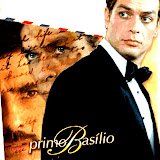
Disposto a reaver cada centavo que perdeu e, mais ainda, a reconquistar sua família, Raul (Alexandre Borges) volta para o Brasil esta semana. Como nada é fácil, ele ainda tem de se esconder de Raj (Rodrigo Lombardi), que anda na sua cola.

Esperto, ele consegue se disfarçar e embarcar sem maiores problemas. Mas, acompanhado do amigo Gopal (André Gonçalves), ele percebe, assim que desembarca, que as coisas estão bem diferentes de quando se foi.

Além de disfarçar a tensão pelo medo de ser reconhecido, Raul tem a desagradável surpresa de saber que Silvia (Débora Bloch) não mora mais na antiga casa. Pior: que a ex-mulher agora é casada com seu melhor amigo, Murilo (Caco Ciocler).

Um duro golpe para Raul, que imaginava encontrar tudo em seu devido lugar. O perigo é que ele enfarte de verdade ao descobrir que a linda e loura filha Júlia (Vitória Frate) anda de caso com um bandidão. Raul vai ter de se acostumar, porque está tudo fora da ordem.

Nanda conta para Yvone que se encontrou com Mike. Abel recebe uma carta anônima sobre a infidelidade de Norminha.

Segunda (13/07) - Raul se esconde de Raj e Maya, que fazem perguntas a Gopal sobre Humberto Cunha. Murilo conversa com Júlia e deixa claro que, para ficar em sua casa, a futura enteada deverá mudar suas atitudes. Raul diz a Gopal que precisa fugir, antes que Raj volte a procurá-lo. Nanda comenta com Yvone sobre o encontro com Mike. Murilo conta a Silvia que Yvone tem se encontrado com Ramiro e ela resolve ligar para a amiga, que inventa uma desculpa.

Terça (14/07) - Gopal e Raul fogem de Raj e conseguem embarcar para o Brasil. Nanda se sente rejeitada pelo marido durante conversa de negócios e resolve ligar para Mike. Yvone atende o celular durante o casamento de Silvia, observada por Aída e Inês. Abel recebe uma carta anônima, dizendo que Norminha o engana. Surya sugere que Amithab vá ao Brasil descobrir sobre a paternidade do filho de Duda. Komal segue o conselho de Kochi e pede abrigo a Maya por uma noite. Raul e Gopal chegam ao Brasil.

Quarta (15/07) - Raul orienta Gopal a procurar Silvia. Maya leva Komal para sua casa e lhe dá uma roupa de Raj para ele vestir. Chanti conta para Camila que já marcaram sua viagem para o Brasil. Raul fica surpreso quando Gopal avisa que Silvia não mora mais na casa da família Cadore. Opash fica surpreso quando Pandit lhe diz que Laksmi se encontra com Shankar no templo. Opash envia um presente para Duda. Raul vê em uma revista uma foto do casamento de Silvia e Murilo.

Quinta (16/07) - Silvia conversa com Murilo sobre a possibilidade de Júlia ir para os Estados Unidos estudar e se afastar de Beca. Indira pergunta por Chanti e Camila diz que ela vai dormir na casa de uma amiga. Komal aparece em casa fingindo estar arrasado e, ao ver o estado do filho, Manu o recebe feliz. Júlia finge curiosidade e pergunta a Inês onde fica o cofre de sua casa. Camila e Ravi entregam a mala de Chanti para que ela possa fugir.


Loading...


Sphere: Related Content
26/10/2008 free counters