[Valid Atom 1.0]

terça-feira, 28 de outubro de 2008

Chef Hideki ensina os segredos milenares do sashimi


Hideki Fuchikami, chef do restaurante Hideki, em São Paulo, ensina técnicas de corte do sashimi, além de dar dicas sobre escolha dos peixes, o modo correto de comer e outros segredos do prato milenar da culinária japonesa. TV UOL

Sphere: Related Content
26/10/2008 free counters

Fazendo macarrão


Fazendo macarrão

o chef Kin Jing Mark mostra como é que se faz um legítimo macarrão.

Sphere: Related Content
26/10/2008 free counters

Screaming fast Mozilla browser Minefield gives a glimpse of Firefox's future


MinefieldI was really disappointed when Google released their Chrome web browser for Windows only. When it comes to browsers, I've tried them all. Right now I regularly switch between Firefox and the latest nightly build from Webkit (essentially Safari). Firefox has the extensibility I rely on, while Webkit has the performance I crave. I had hoped that Chrome would magically combine those two crucial traits and become my new go-to browser. Unfortunately, Chrome is not yet nearly as extensible as Firefox, and isn't available for Mac (yet).

So imagine my surprise when I stumbled upon the latest experimental Firefox build from Mozilla, called Minefield. This Minefield should not be confused with the unofficial optimized builds of Firefox that Brett wrote about, which are also referred to as Minefield. Minefield is Mozilla's code-name for this generation of Firefox, and the code name is used for unofficial builds to avoid infringing upon the Firefox name.

So, what's so special about the Mozilla Minefield build? It's fast... smokin' fast. This is essentially a version of Firefox with the new TraceMonkey JavaScript engine under the hood, and as Ars Technica reports, it tests even faster than Google's V8 JavaScript engine.

As most Mac users have noted, Firefox is kind of pokey on the Mac platform, particularly compared with WebKit or even Safari, and even when compared with Firefox on a similarly spec'd Windows machine. Version 3 of Firefox was supposed to fix the performance problem, and while it's somewhat better, it's still not great.

Well, Minefield is great. Using Gmail or even a complex content management system is a breath of fresh air. I feel like my web apps are finally keeping up with me.

There's one caveat, and it's a big one: though the current version number is 3.1b2pre (the "b" denoting beta status), this is really alpha software. That means there will be bugs, and you will experience problems. Surprisingly, though, Minefield has been very stable in my testing -- not yet crashing in a full day of testing. I have restarted it a couple of times due to suspicion that something strange was going on, but I can't say for sure if it was.

If you use it with your regular Firefox profile rather than creating a new one, Minefield will complain that most of your extensions are not compatible. Using Nightly Tester Tools, I re-enabled all of the extensions that it disabled, and every single one of them appears to be working normally, even the complicated ones like Better Gmail 2 and TabMixPlus.

I've only had a problem with one site so far, but unfortunately it's a big one: Google Docs. The page simply won't load. But for now, I'm willing to open WebKit or Camino to edit my Google Docs, because I'm just too smitten with the raw speed that Minefield offers.

One last note: being a nightly build, you will likely find that new versions are available, well, nightly. Mozilla makes the process of upgrading to the latest version virtually painless by using the built-in version monitoring process that Firefox uses.


Internet/ Mozilla lancia Minefield, il nuovo browser più veloce di Chrome
Lunedí 27.10.2008 18:10

Un browser almeno il 10% più veloce di Google Chrome: ecco Minefield, l’ultimo arrivato in casa Mozilla, l’azienda open source che tutti conoscono per Firefox, prima alternativa ad Internet Explorer, che detiene il 72% del mercato dei software di navigazione. In queste ore Mozilla sta invitando i suoi utenti (oltre 200 milioni, quota di mercato del 20%) a saggiare la velocità del nuovo prodotto, già disponibile online in versione pre-alpha, ovvero quasi definitiva. Come nella migliore tradizione open source, quindi, Mozilla conta sulle segnalazioni e sull’apporto degli utenti esperti per migliorare prestazioni ed efficacia del suo nuovo browser.

Eccola, dunque, la risposta a Chrome, lanciato in grande stile da Google lo scorso settembre. In quell’occasione John Lilly, Ceo di Mozilla, aveva dichiarato che di non essere spaventato dall’aumento dei concorrenti nel mercato dei browser. Un chiaro segnale che l’azienda da lui guidata non sarebbe rimasta a guardare, nonostante dipenda in buona parte da un accordo economico con Google stessa, recentemente rinnovato fino al 2011. E sempre commentando il debutto di Chrome, Lily fece notare come il browser sia, almeno per ora, il solo core-business di Mozilla, a differenza delle altre case produttrici, come Microsoft, Apple e Google, che hanno altrove i loro interessi principali. Traduzione: noi ci occupiamo principalmente di browser, ergo lo facciamo meglio.

D’altra parte, però, la stessa Mozilla, con Project Wave,s già dal 2007 aveva iniziato a proporre alcuni servizi in alternativa a Google: creando un account, i suoi utenti possono memorizzare tutta una serie d’informazioni, come i preferiti e le password , disponibili online da qualsiasi dispositivo, come avviene con iGoogle, ma con la promessa di una maggiore tutela dei dati personali rispetto al colosso di Mountain View.

Elvira Pollina

Sphere: Related Content
26/10/2008 free counters

A Sao Paulo, la candidate du président Lula en difficulté aux municipales


SAO PAULO (BRÉSIL) ENVOYÉ SPÉCIAL

Sur l'avenue Paulista, l'artère chic de Sao Paulo, les drapeaux rouges portent l'effigie de Marta Suplicy ; les verts celle de son adversaire, Gilberto Kassab, le maire de droite (DEM) sortant. A deux jours du second tour des élections municipales, dimanche 26 octobre, les sondages donnent à ce dernier 17 points d'avance.

Marta Suplicy, la candidate du président Lula aux élections municipales de Sao Paulo (Brésil), le 5 octobre 2008.

AP/CARLOS GOLDGRUB
Marta Suplicy, la candidate du président Lula aux élections municipales de Sao Paulo (Brésil), le 5 octobre 2008.


Nul besoin de lire la presse pour voir d'où souffle le vent qui gonfle les bannières. Ce jour-là, près du parc Trianon, le maire arpente les trottoirs, accompagné d'une vingtaine d'handicapés en fauteuil roulant. Caméras, embrassades, sourires jusqu'aux oreilles. Un haut-parleur hurle un jingle saccadé : "On veut que Kassab reste à la mairie !" Sans oublier le "Kassabinho", la poupée géante, fétiche du candidat, qui ferme la marche.

L'atmosphère est beaucoup moins festive dans le camp d'en face. Place Arouche, dans le quartier Republica, un petit groupe de fidèles, portant T-shirt vermeil, scande le nom de leur idole : "Ole ! Ole ! Ola ! Marta ! Marta !" Ce sont des "motorboys", ces coursiers à deux roues qui dribblent les terribles embouteillages de la plus grande ville d'Amérique du Sud (11 millions d'habitants).

Mais - changement de programme - Marta ne viendra pas. Son adjoint, Aldo Rebelo, la remplace. Il promet de mieux protéger les motocyclistes dont les Honda s'alignent devant lui. Il évoque "la confiance" et "la sérénité" de la candidate, mais on sent qu'il n'y croit guère. Elle lancera le même jour dans un autre meeting : "Nous avons beaucoup de Pelé pour marquer des buts d'ici à dimanche." Pourtant, chacun le sait : il est trop tard pour "sauver le brave soldat Marta".

Marta Suplicy, 63 ans, appartient depuis sa fondation, en 1980, au Parti des travailleurs, le PT du président Lula. Issue d'une famille patricienne, psychologue de formation, elle anime dans les années 1980 un programme télévisé éducatif intitulé "Comportement sexuel". Femme d'un sénateur, elle occupe le fauteuil de maire de 2000 à 2004, et le perd. Lula la nommera ministre du tourisme.

Charmeuse, impulsive, elle est gaffeuse à l'occasion. Comme lorsqu'elle conseille en 2007 aux voyageurs inquiets du chaos dans le trafic aérien : "Relaxez-vous et profitez-en !" Elle est très proche de Lula qui fut, en 2003, le témoin de son second mariage. Le président a participé à plusieurs de ses meetings, a choisi son conseiller électoral, et dépêché près d'elle son chef de cabinet. Tout cela n'a pas suffi.

Gilberto Kassab, 48 ans, est d'une autre étoffe. Ingénieur et économiste, ce descendant d'une famille libanaise ne déborde pas de charisme. Mais c'est un gros travailleur, un gestionnaire méthodique qui se lève à 5 heures du matin pour lire la presse et envoyer ses premiers courriels. Il est l'archétype de la nouvelle classe urbaine brésilienne.

Sauf ultime coup de théâtre, il va gagner pour plusieurs raisons. Appuyé par les milieux d'affaires, il a injecté beaucoup d'argent dans sa campagne. Il a obtenu de ses alliés qu'ils lui cèdent leur temps de parole télévisée, et a su en tirer le meilleur profit en valorisant son bilan. Il est apparu avant le premier tour comme le plus crédible adversaire du PT.

Car, et c'est l'essentiel, Sao Paulo, berceau du parti de Lula, lui reste rétive. Dans la capitale économique du Brésil, un gros tiers de l'électorat vote contre le PT. Celui-ci n'a remporté la mairie, à deux reprises, que grâce à la division ou à l'essoufflement de ses rivaux. Aujourd'hui, la géographie électorale joue encore plus en faveur du maire sortant.

Vidée de son industrie, repoussée vers la périphérie, Sao Paulo est devenue une ville de services, où règne la classe moyenne. Comme le souligne le sociologue Francisco de Oliveira, la métropole abrite "un immense secteur informel où les travailleurs, en quête d'avantages immédiats, votent plutôt à droite". Très populaire au niveau national, Lula n'a pas le pouvoir de transfuser son propre prestige à sa protégée. Il lui restera loyal jusqu'à dimanche, mais n'a pas l'intention ensuite, note un journaliste brésilien, "de mourir dans les bras de Marta".

Jean-Pierre Langellier

Sphere: Related Content
26/10/2008 free counters

Le centre-gauche conforte ses positions dans les villes brésiliennes


Rio de Janeiro correspondant

Le président brésilien Luiz Inacio Lula da Silva jouit d'une énorme popularité - autour de 70 % d'opinions favorables d'un sondage à l'autre - mais ce capital de sympathie ne lui permet pas pour autant de faire propulser qui il voudrait à la tête des grandes métropoles du Brésil. Telle est la principale leçon des élections municipales, dont le second tour avait lieu dimanche 26 octobre dans les trente villes de plus de 200 000 habitants - dont onze capitales d'Etat - où aucun candidat n'avait obtenu la majorité absolue au premier tour, trois semaines plus tôt.


Le plus important résultat concerne Sao Paulo, la capitale économique du pays, où le scrutin se solde par un échec pour le Parti des travailleurs (PT, gauche) du président Lula. Sa candidate, Marta Suplicy, a été battue de 21 points par le maire sortant de droite, Gilberto Kassab (Parti démocrate, DEM). Celui-ci est le premier maire réélu dans l'histoire moderne de Sao Paulo.

Le chef de l'Etat avait participé, avant le premier tour, à plusieurs meetings de soutien à sa favorite. Les mauvais sondages l'avaient ensuite dissuadé de s'engager trop à ses côtés. La défaite cinglante de Marta Suplicy a une portée symbolique. Avec 11 millions d'habitants, Sao Paulo est la première ville du Brésil. C'est là que se joue en priorité la rivalité entre droite et gauche.

PRIME AUX SORTANTS

Pourtant on aurait tort de vouloir trop "nationaliser" ce revers du PT. La classe moyenne est plutôt conservatrice à Sao Paulo, où le président Lula n'était arrivé qu'en seconde position lors de l'élection présidentielle de 2006. En outre, dans l'immense Brésil, pays fédéral à trois niveaux de pouvoirs, les alliances et les enjeux locaux, les personnalités des édiles, et la qualité de leur gestion ont plus de poids que les proclamations de soutien, fussent-elles présidentielles. Une majorité d'électeurs peuvent approuver la politique du gouvernement Lula tout en votant, dans leur ville, pour un candidat de l'opposition.

Ce scrutin a alloué une très forte prime aux sortants : 19 des 20 maires soumis à réélection dans les capitales d'Etat l'ont emporté. Le PT, fondé en 1980 et dernier-né des grands partis, poursuit son ancrage municipal mais perd deux capitales. Il en conserve six, à égalité avec son partenaire centriste, le Parti du mouvement démocratique (PMDB), dont le candidat, Eduardo Paes, gagne de justesse à Rio de Janeiro.

Pour le président Lula, l'essentiel est de voir progresser la "base alliée" qui soutient son gouvernement autour du PT et du PMDB - et conserve 21 capitales d'Etat sur 26 - dans la perspective de l'élection présidentielle de 2010. Le président sortant, après deux mandats, ne pourra légalement se représenter. Il souhaite que la coalition actuelle renouvelle son alliance et appuie le candidat qu'il aura promu.

Pour l'instant, son choix se porte sur Dilma Rousseff, sa ministre chef de cabinet, qui joue à Brasilia le rôle officieux de premier ministre. Si cette dernière entre en lice, elle trouvera sans doute face à elle l'homme fort de l'opposition, le gouverneur de Sao Paulo, José Serra du Parti social démocrate brésilien (PSDB), candidat malheureux contre Lula da Silva en 2002.

La défaite, dimanche, du PT à Sao Paulo est une victoire pour M. Serra, parrain politique de Gilberto Kassab, qui lui a dédié sa réélection. A deux ans de l'échéance présidentielle, le PT est victime paradoxalement de la trop forte personnalité du président Lula. Il n'a su, ou pu, trouver en son sein aucun héritier incontesté.

Son leadership dépend plus que jamais des décisions que le chef de l'Etat prendra au cours de ses deux dernières années de pouvoir dans un contexte de crise économique mondiale qui rendra sa fin de mandat moins facile que prévu.

Jean-Pierre Langellier

Sphere: Related Content
26/10/2008 free counters

Brasile/ Municipali, Lula vince in sei città, ma va al ballottaggio nei centri chiave


Si rafforza la leadership di Lula nelle elezioni municipali in Brasile in vista delle elezioni del 2010. Il partito guidato dal presidente si è aggiudicato infatti sei delle ventisette capitali di stato federali e andrà al ballottaggio in 5 centri chiave tra cui San Paolo e Rio de Janeiro. Si dovrà attendere il 26 ottobre per avere il quadro finale dei risultati delle municipali in Brasile e sullo stato di salute del partito dei lavoratori in vista delle elezioni politiche del 2010. Il presidente brasiliano può intanto consolarsi con una popolarità che sfiora l'80%.

“Coloro che vivono nei quartieri poveri hanno bisogno di un sindaco- dice un abitante di una favela di Rio- che garantisca la nostra salute, la sicurezza, e tutte le cose basilari di cui abbiamo bisogno”.“La scolarizzazione è alla base di tutto-dice una cittadina di Rio- poi vengono sicurezza e ambiente”.

Secondo le autorità le operazioni di voto si sono svolte senza atti di violenza ma si registra il sequestro lampo di un reporter straniero trattenuto per mezz’ora dai narcotrafficanti nella favela di Rochina la più grande di Rio de Janeiro.


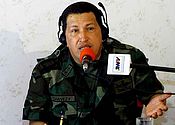
Hugo Chàvez in radio
In vista delle elezioni locali che si terranno il 23 novembre prossimo in Venezuela, Hugo Chàvez ha deciso di sospendere fino a dopo il voto il suo personale programma radiofonico settimanale
, intitolato 'Alo' Presidente', vale a dire 'Salve, Presidente': lo ha annunciato lo stesso leader venezuelano a margine di una visita a un nuovo impianto petrol-chimico situato a Carabobo, alle porte della capitale.

Chàvez ha poi rassicurato i propri sostenitori-elettori, precisando che non per questo sparirà del tutto dai mass media: sarà ancora possibile seguirlo tanto alla televisione quanto alla stessa radio, ha affermato, anche se le relative apparizioni resteranno circoscritte a "inaugurazioni di opere pubbliche e comizi in piazza di candidati ufficiali". Piuttosto seguito, almeno stando alla propaganda di regime, di 'Alo' Presidente' sono già andate in onda 323 edizioni da quando l'ex golpista prese il potere nel Paese sud-americano, nel febbraio '99.

Quanto alle amministrative, i sondaggi indicano che l'opposizione dovrebbe far registrare qualche progresso rispetto ai sei Stati federati su 25 che controlla attualmente. Gli aventi diritto sono circa diciassette milioni.

Sphere: Related Content
26/10/2008 free counters

Brasile/ Amministrative, debacle per Lula: persa anche San Paolo


Debacle al secondo turno delle elezioni amministrative in Brasile per il presidente Lula. Delle 30 principali città chiamate alle urne per il ballottaggio per l’elezione di sindaco e maggioranza consiliare, i candidati appoggiati da Lula e dal Partido dos trabalhadores (Pt) ne hanno vinte solo 8. La sconfitta più bruciante arriva da San Paolo: per mesi la candidata e amica personale di Lula, Marta Suplicy, aveva guidato i sondaggi sul suo oppositore in maniera così convincente da farla diventare una delle carte più sicure alla successione dello stesso presidente del Brasile. Ma Suplicy, che è stata anche ministro della Repubblica, ha dovuto cedere dinanzi alla valanga di consensi raccolti dal sindaco uscente Gilberto Kassab: il candidato del partito Democratas all’opposizione si conferma primo cittadino di San Paolo col 61 per cento dei voti.

Una vittoria che il suo “sponsor” politico ufficiale, l’esponente socialdemocratico José Serra, farà pesare nella corsa alla successione di Lula nel 2010. Lo stesso Serra, governatore della regione di San Paolo, può contare importanti vittorie anche a Salvador, dove il sindaco Joao Henrique Carneiro ha battuto col 58 per cento dei voti Walter Pinheriro (Pt) e a Porto Alegre, dove il partito di Lula ha tentato invano di riprendersi l’amministrazione di una città guidata per sedici anni, ed eletta sede del Global social forum.

I portoalegrensi hanno ridato le chiavi della città a José Fogaça (59,1 per cento dei voti), lasciando la candidata del Pt, María del Rosario Nunes, al palo. Le uniche buone notizie per il presidente arrivano da Rio de Janeiro: nella città carioca Eduardo Paes ha ottenuto il 59,8 per cento dei voti sconfiggendo il leader storico dei Verdi, Fernando Gabeira, giunto a sorpresa la secondo turno.

Sphere: Related Content
26/10/2008 free counters

Ex-Militant Concedes Loss in Election for Rio Mayor


Published: October 26, 2008

RIO DE JANEIRO — A Brazilian congressman who helped kidnap an American ambassador during Brazil’s military dictatorship came up short Sunday in his bid to be elected mayor of Rio.

The congressman, Fernando Gabeira, conceded defeat late Sunday to Eduardo Paes, a congressman who is allied with Luiz Inácio Lula da Silva, Brazil’s president. With 99 percent of the votes counted, Mr. Paes had 51 percent of the vote to Mr. Gabeira’s 49 percent.

Mr. Gabeira, 67, was one of four men who kidnapped the ambassador, C. Burke Elbrick, in September 1969, holding him for four days before letting him go in return for the release of 15 leftist political prisoners.

Mr. Paes, 38, formerly served as an administrator of Jacarepaguá and of Barra da Tijuca, two neighborhoods of Rio. He was backed by Sérgio Cabral, the governor of Rio State. Mr. Gabeira had the support of many of the wealthy elite in Rio, which has struggled with persistently high crime and the steady loss of its industries to São Paulo. But Mr. Gabeira was unpopular with conservatives for his positions in favor of legalizing marijuana, abortion and gay marriage.

Mr. Paes tried to stress during the campaign that he would be a better administrator than Mr. Gabeira, and that he was the better choice to act as a bridge between the state and city governments.

Mr. Gabeira would have been the latest former leftist militant to gain a position of power in government in Brazil. Franklin Martins, Mr. da Silva’s press secretary, participated in the kidnapping with Mr. Gabeira, and he was part of the same Communist group, MR-8, which robbed banks and carried out assaults on the police and the military in its struggle against Brazil’s military regime. Dilma Rousseff, Mr. da Silva’s chief of staff, also served in the resistance and was captured by the government’s police force, and then was convicted, jailed and tortured in the early 1970s.

Sphere: Related Content
26/10/2008 free counters

President Lula's party suffers defeats in Brazil mayoral elections


  • AP foreign
  • , Monday October 27 2008

Rio de Janeiro (dpa) - The Workers' Party of Brazilian President Luiz Inacio Lula da Silva has suffered severe losses in mayoral elections, losing in such metropolises as Sao Paulo and Porto Alegre.

In Sao Paulo, the nation's largest city and its financial hub, incumbent Gilberto Kassab of the conservative Democrats won by a landslide with 61 per cent of the vote in Sunday's runoff against Workers' Party candidate Marta Suplicy.

Political analysts said the win for Kassab strengthened the position and ambitions of Sao Paulo Governor Jose Serra of the Brazilian Social Democracy Party, which supported Kassab. Serra is seen as the most promising rival to an as-yet-unknown Workers' Party candidate for president in 2010 elections.

Until her loss, Suplicy, who had served as tourism minister under Lula, had been considered a likely candidate for her party to replace Lula, who may not run again for president after serving two terms.

The Workers' Party suffered another defeat in Porto Alegre, the capital of the southern state of Rio Grande do Sul, seen as a traditional bastion of Lula's faction. Mayor Jose Fogaca of the Brazilian Democratic Movement Party (PMDB) won re-election with 59 per cent of the vote against the Workers' Party's Maria do Rosario with 41 per cent.

Runoffs were held in 11 state capitals and 19 other large cities after no candidates achieved a majority of votes in the first round of voting on October 5. According to Brazilian law, runoffs are held only in cities with populations of more than 200,000.

The centrist PMDB was seen as the big winner in the elections. The party, which is the largest faction in Congress, now leads 1,200 of 5,567 cities in Brazil, including many of the largest and more politically important municipalities, such as Rio de Janeiro, Salvador de Bahia, Florianopolis and Porto Alegre.

The Workers' Party, in contrast, won in six of the 26 state capitals and in 550 cities overall.

In Rio, PMDB candidate Fernando Paes won the mayoral election with less than 51 per cent of the vote against the Green Party's Fernando Gabeira, a guerilla in the 1960s during Brazil's military dictatorship.

Despite its success at the ballot box, the PMDB was not expected to field a presidential candidate in 2010 but to support the coalition with the best chances of victory.

"No one can govern Brazil today without the PMDB," commentator Cristiana Lobo said on the television network Globonews. dpa er ls

Sphere: Related Content
26/10/2008 free counters

Ao menos 455 mil ficarão sem água devido a manutenção

Ao menos 455 mil pessoas na região leste de São Paulo ficarão sem abastecimento de água nesta terça-feira devido à manutenção do reservatório de Itaquera pela Sabesp (Companhia de Saneamento Básico do Estado de São Paulo).

De acordo com a estatal, a partir das 6h será feita a substituição da válvula de controle de fluxo para entrada de água no reservatório.

Essa intervenção é necessária para melhorar o controle da vazão de entrada no reservatório e aumentar sua eficiência, segundo a Sabesp.

A previsão de parada está programada para ter duração de aproximadamente 13 horas --até provavelmente 19h30-- horário que deve começar a ser normalizado o abastecimento. Nos setores mais críticos, que são os pontos mais altos e distantes do reservatório, a normalização deve ocorrer na madrugada de quarta-feira (29).

De acordo com a Sabesp, 30 pessoas, entre técnicos e especialistas em saneamento, foram mobilizados para concluir os serviços no menor tempo possível.

A Sabesp reforçará a sua Central de Atendimento 195 durante a parada programada.

Sphere: Related Content
26/10/2008 free counters