[Valid Atom 1.0]
Mostrando postagens com marcador HIV. Mostrar todas as postagens

quinta-feira, 16 de dezembro de 2010

Homem pode ter se curado da Aids com transplante de células-tronco


Publicada em 15/12/2010 às 10h21m

AP

NOVA YORK - Um transplante de sangue pouco comum pode ter curado um americano da Aids, afirmaram médicos nesta quarta-feira. O homem, que tem cerca de 40 anos e mora em Berlim, recebeu um transplante de sangue feito a partir de células-tronco adultas em 2007 para tratar uma leucemia. O doador tinha uma mutação genética que conferia uma resistência natural ao HIV. Três anos depois do procedimento, os médicos constataram que o paciente não tem sinais do câncer ou da infecção por HIV, segundo um relatório publicado na revista 'Blood'.

- É interessante comprovar que medidas extraordinárias podem curar alguém com o HIV. Porém, o procedimento é muito arriscado para se tornar o tratamento padrão - afirma o médico Michael Saag, da Universidade de Alabama, em Birmingham, nos Estados Unidos, e conselheiro da HIV Medicine Association, instituição formada por médicos especialistas em Aids.

Os transplantes de médula óssea - ou de sangue criado a partir de células-tronco adultas - são usados no tratamento contra o cãncer. O processo envolve a destruição do sistema imunológico do paciente com radiação e medicamentos e a sua substituição a partir das células de um doador compatível. O risco de mortalidade do procedimento é de cerca de 5%.

- Não podemos aplicar a descoberta nos pacientes saudáveis porque o risco é muito alto, principalmente se eles estão respondendo bem aos antirretrovirais.


LAST

Sphere: Related Content
26/10/2008 free counters

quinta-feira, 2 de dezembro de 2010

World marks 23rd AIDS Day

Watch Video

Play Video

December 1st is the 23rd World AIDS Day. This year's theme is Universal Access and Rights. People around the world are marking the occasion, hoping to raise awareness of the disease.

In India, school students in the western Rajkot city participated in a campaign to spread awareness about the immune system disease.

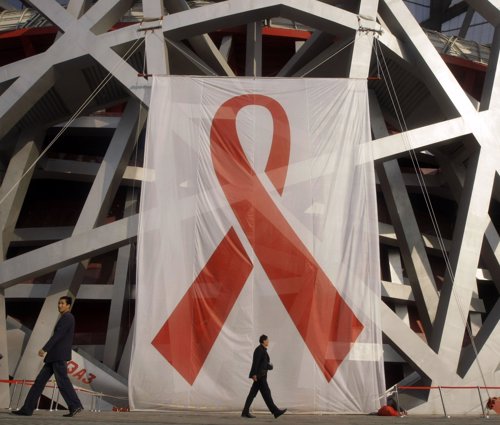
The organizer said that the students made a 40-meter-long formation of red ribbon, to spread the message: hate the disease but not the patients.

Sonal Shah, Organizer, AIDS Awareness Campaign, said, "The objective is to make the young generation of today aware of AIDS, as this is the responsibility of society, parents and family and the responsibility of schools and other educational institutions. It is our duty to show the students a red light towards the disease and to make them understand why this disease is dangerous, and why they should be careful and how."

In Australia, Bono and The Edge of the pop music band-U2 joined Australian Prime Minister Julia Gillard at the Sydney Opera House.

They watched the harbor area turn red for World Aids Day.

Gillard later said prevention and education are the best tools in combating the virus.

She also highlighted the danger of new generations becoming complacent about the spread of HIV/AIDS.

In the Western African country of Mali, community workers invited 20 rap performers to a two day workshop on sexually transmitted diseases.

The rappers used what they'd learned to compose a rap about AIDS and HIV.

Then they performed the song at a community event put on at the local youth center.

Over one million Africans have taken part in workshops and seminars to promote World AIDS Day this year.


LAST

Sphere: Related Content
26/10/2008 free counters

Corruption threatens to cripple state's war on HIV

timesofindia.indiatimes.com


Sumitra Deb Roy , TNN, Dec 3, 2010, 02.35am IST


MUMBAI: While the state is working hard to contain HIV/AIDS, it seems to have failed to immunize its medical programme against corruption and mismanagement of funds. At least three high-level inquiries are currently underway, in addition to several undercover operations to nab corrupt medical officers.

The Maharashtra State Aids Control Society (MSACS) is probing charges of bribery against a medical officer at Thane civic hospital. The officer had allegedly demanded a bribe of Rs 5,000 from the patient to write a prescription for free anti-retroviral drugs. The role of the centre's counsellor is also suspect in the episode. Another inquiry is on against a medical officer who allegedly demanded money to refer a patient for second line HIV/AIDS treatment. There have also been verbal complaints about medical officers demanding bribes to conduct CD4 tests, which are free of cost.

Project director of MSACS, Dr Ramesh Devkar, said that urgent steps were being taken to curb corruption at ART centres across the state. "In about a fortnight, we will crackdown on all corrupt officers," he said. "We are very discreet about our plan of action as we do not want to alert any of the wrongdoers," he added. Devkar said Pune, Aurangabad and Solapur have emerged as the most notorious districts for corruption.

The state-run JJ Hospital has to cater to a high number of HIV patients due to the apathy of officials posted at ART centres. A Sawant (32), a resident of Nagpur, was forced to come to JJ after the medical officer refused to change his medication, despite the fact that he had suffered strong drug reactions. "Once I reached the hospital 10 minutes late. The medical officer threw the file on my face and refused to examine me," he said. "The patients are made to feel guilty for having contracted the virus," he said.

Another patient from Solapur had developed lymph nodes and required immediate medical attention. "But, the medical officer there referred the patient all the way to Mumbai without giving any medication for temporary relief," said head of ART Centre of JJ hospital Dr Alaka Deshpande. "It calls for supervision of all ART centres," she said.

Clinical psychologist at JJ Hospital' s ART centre, Vaishali Shelar, said that they have started insisting that patients submit written complaints against errant doctors or counselors. These complaints are then forwarded to the state agency or Mumbai District Aids Control Society.


LAST

Sphere: Related Content
26/10/2008 free counters

GCCC offers free HIV testing for 'World AIDS Day'

Updated: 8:24 AM Dec 2, 2010


Panama City - According to BASIC, a non profit organization that works with individuals who have either AIDS or HIV, there are over 500 people in Bay County with the disease. Communities across the globe focused their attention on the impact of HIV or AIDS on World AIDS Day.
Posted: 7:21 PM Dec 1, 2010
Reporter: Sandra Osborne
Email Address: Sandra.osborne@wjhg.com


LAST

Sphere: Related Content
26/10/2008 free counters

quarta-feira, 1 de dezembro de 2010

#news : AIDS-free Generation "Achievable": UN


Photo taken on November 30 shows students from a primary school in Dexing, Central China's Jiangxi Province observing the World AIDS Day on December 1. [Photo: Chinanews.com]

The UN Children's Fund ( UNICEF) on Tuesday said achieving an AIDS-free generation is possible if the international community escalates its efforts to provide universal access to HIV prevention, treatment and social protection to those in need.

In a report titled "Children and AIDS: Fifth Stocktaking Report 2010," UNICEF said achieving the goal of a generation without AIDS will depend largely on reaching the most marginalized members of society.

The report's release coincides with World AIDS Day, which is set to be observed on Dec. 1. AIDS is a disease of the human immune system and marks the final and most serious stage of HIV.

According to Michel Sidibe, executive director of the Join UN Program on HIV/AIDS (UNAIDS), around 370,000 children are born with HIV each year. Without treatment, about 50 percent of the infants infected with HIV die before their second birthday.

"We have to stop mothers from dying and babies from becoming infected with HIV. That is why I have called for the virtual elimination of mother to child transmission by 2015," said Sidibe in a press release.

Young women under the age of 25 remain the most vulnerable to HIV infection throughout the world, according to UNICEF. Worldwide, over 60 percent of all young people living with HIV are female. In sub-Saharan Africa that figure is close to 70 percent.

Executive Director of the UN Population Fund Thoraya Ahmed Obaid said in a press release that "we must increase investments in young people's education and health, including sexual and reproductive health, to prevent HIB infections and advance social protection."

"Reaching marginalized young people, including vulnerable adolescent girls and those who are not in school, must remain a priority," she added.


LAST

Sphere: Related Content
26/10/2008 free counters

terça-feira, 7 de setembro de 2010

Scientists in Uganda study formation of hybrid HIV strains

KAMPALA, Sept. 7 (Xinhua) -- Scientists in Uganda are investigating why and how the different strains of HIV in the east African country are forming hybrid viruses, a senior government official said here on Tuesday.

David Kihumuro-Apuuli, head of the Uganda Aids Commission told reporters that although hybrid viruses also known as 'recombinant' viruses have existed in Uganda for years, scientists at the Uganda Virus Research Institute (UVRI) are trying to investigate what leads to their formation.

"These recombinant viruses are not new HIV strains in Uganda; they have been seen over the last many years in our populations. What scientists at the Medical Research Council/UVRI are trying to do is to find out how this occurs and why are viruses recombining, " he said.

In Uganda there are two major HIV-1 strains A and D that have been reported. There also some other strains such as C and B, though theses are in smaller numbers.

Studies have shown that these strains have combined to form for instance A/D or D/A.

Apuuli said that the findings of the study which will be released in 2012 will also indicate whether the recombinant viruses are resistant to drugs.

He said the results will also show whether HIV infected people are reinfected to form the recombinant viruses or whether they acquired the combination from the start.

The study is being carried out among fishing communities in Wakiso and Masaka districts on the shores of Lake Victoria.

Uganda has achieved success in reducing the HIV prevalence from 30 percent in the 1980s, to the current national average of 6.4 percent.

However, there are concerns the country is losing the HIV fight with evidence of stagnation in prevalence and rising new infections especially in married couples.


๑۩۞۩๑๑۩۞۩๑๑۩۞۩๑๑۩۞۩๑๑۩۞۩๑


LAST

Sphere: Related Content
26/10/2008 free counters

domingo, 15 de agosto de 2010

Portadora de HIV receberá pensão após morte do pai, confirma TRF-4


Da Redação - 11/08/2010 - 18h07

O TRF-4 (Tribunal Regional Federal da 4ª Região) confirmou, na última semana, sentença da Justiça Federal de Curitiba que concedeu à portadora de vírus HIV pensão por morte de seu pai, que era funcionário público


De acordo com informações da Justiça Federal, a União havia recorrido contra a decisão alegando que a autora não pode ser considerada inválida nem incapaz para o trabalho, pois não apresenta sintomas da doença.

Consta nos autos que o pai da autora era agente administrativo do Ministério do Exército e faleceu em janeiro de 2008. A filha, nascida em 1972, havia sido designada por ele como beneficiária desde 1993, sendo portadora do vírus desde 2001.

Após analisar o recurso, o relator do processo, desembargador federal Carlos Eduardo Thompson Flores Lenz, entendeu que a autora deve ser enquadrada legalmente como filha maior inválida, pois “não se pode deixar de considerar a gravidade da enfermidade de que sofre, com as limitações daí decorrentes", afirmou o magistrado.

Thompson ainda observou: "mesmo que a doença possa ser controlada e esteja assintomática no momento, trata-se de moléstia grave, contagiosa e incurável".

A União poderá recorrer da decisão.


๑۩۞۩๑๑۩۞۩๑๑۩۞۩๑๑۩۞۩๑๑۩۞۩๑


LAST

Sphere: Related Content
26/10/2008 free counters

sábado, 31 de julho de 2010

AIDS expert tells China's gay men to face up to responsibilities

by Xinhua writers Du Jie, Shang Yang, Xu Yalan

BEIJING, July 30 (Xinhua) -- A leading international expert on HIV/AIDS Friday challenged China's gay men to front up to their responsibilities in fighting the spread of the disease.

Dr. Ray Yip, director of the China Program of the Bill and Melinda Gates Foundation, said the spread of HIV/AIDS in China through homosexual sex was "one of the biggest emerging challenges" to controling the disease.

Dr. Yip told CNC World, the satellite news television station run by Xinhua News Agency, that HIV transmission through "MSM" (men having sex with men) had boomed since 2003.

This year, the Beijing Municipal Center for Disease Control and Prevention (CDC) announced sexual activity between men and men had become the main channel of HIV transmission in the city, exceeding both heterosexual sex and drug use.

Poor awareness of safe sex among gay men contributed to the sharp rise as many gay men had multiple sex partners, and did not always use condoms.

"We need the MSM group to engage their community to take part in the intervention," Dr. Yip told CNC.

"Will they promote safe sex? Will they be promoting early testing? Will they be supporting people already with HIV? So the key is their involvement in the prevention."

Social pressures forced many HIV carriers to remain hidden, and many were reluctant to admit they were HIV carriers, said Dr. Yip.

They need to show their faces and let their voices be heard, said Dr. Yip.

Homosexuals, sex workers, drug abusers and underground blood donors were all most at risk of infection and the biggest danger to others.

"The prevention of the spread of HIV, regardless of which group, drug users, sex workers or men having sex with men, is the same," Dr. Yip said.

"The key thing is that the high risk behavior needs to be reduced.

"It is those people who don't know they are HIV carriers are dangerous. We need to find them," said Dr. Yip.

However, he said, "China represents one of the few countries in Asia that really takes AIDS seriously."

The Bill and Melinda Gates Foundation had committed 50 million U.S. dollars to support HIV/AIDS prevention efforts in China, supporting both governmental and non-governmental programs focused on the "priorities": prevention services for high-risk groups, HIV testing, prevention and support for people living with HIV, and stigma reduction.

"We fund government programs in about 15 cities across China to work with NGOs who fund high-risk communities, such as MSM, to mobilize and develop their capacity to do the prevention," Dr. Yip said.

The foundation, which cooperates closely with China's Ministry of Health (MOH), was supporting groups that promoted "peer education" such as Zhitong, a volunteer organization.

Luo, the head of Zhitong programs who would only give his surname, said, "We give away condoms and brochures in gay bars and parks, set up a free hotline, and conduct salons or lectures regularly."

The organization, which is financially supported by the Gates foundation and local health agencies, has more than 200 volunteers and claims to have contacted at least 60,000 people.

MOH figures showed that by the end of last year, MSM transmission accounted for 32.5 percent of China's total HIV/AIDS infections, up from only 0.4 percent in 2005.

China had 740,000 people living with HIV/AIDS, 105,000 of whom had AIDS by the end of 2009, MOH data showed.

The Chinese government has lifted the 20-year-old ban on entry of foreigners with HIV/AIDS in a move to eliminate unequal treatment for people living with HIV/AIDS.

Since the end of 2003, the government has carried out a policy of free blood tests for those with HIV, free education for orphans of AIDS patients, and free consultation, scanning tests and anti-virus therapies for pregnant women.


๑۩۞۩๑๑۩۞۩๑๑۩۞۩๑๑۩۞۩๑๑۩۞۩๑


LAST

Sphere: Related Content
26/10/2008 free counters

segunda-feira, 26 de julho de 2010

Address TB challenges now or lose fight against TB: WHO warns

TAGAYTAY CITY, Philippines, July 26 (Xinhua) -- The World Health Organization (WHO) warned Monday that the Western Pacific Region's gains in tuberculosis control over the last decade would be lost unless more financial and technical support are put.

Shin Young-soo, WHO regional director for the Western Pacific, said TB control programs in the region face significant challenges. "The TB epidemic tends to concentrate in vulnerable and marginalized populations who have limited access to health care and are difficult to reach."

The remarks were made at the Stop TB Technical Advisory Group meeting, which was held here from July 26 to 28 to discuss the draft Regional Strategy to Stop TB in the Western Pacific Region ( 20112015).

"HIV still poses a major threat and has the potential to reverse the gains achieved by the TB control efforts," he said.

WHO said countries will need to strengthen early case detection and universal access to quality TB services while maintaining DOTS, directly observed treatments.

Reviewing the progress the Western Pacific region made over the past decade, WHO said, more than 1.3 million patients in the Western Pacific Region are diagnosed with TB and nearly 90 percent of them are successfully treated every year. Due to the successful expansion of quality TB services, the estimated number of prevalent TB patients in the region fell from 3.6 million in 2000 to 2 million in 2008. Fewer patients are also dying from the disease.

The region is working toward the goal of decreasing by half TB prevalence and mortality rates compared with 2000 levels.


๑۩۞۩๑๑۩۞۩๑๑۩۞۩๑๑۩۞۩๑๑۩۞۩๑


LAST

Sphere: Related Content
26/10/2008 free counters

sexta-feira, 16 de julho de 2010

As relações de trabalho e o HIV/Aids


Autor(es): Luciano Athayde Chaves
Correio Braziliense - 15/07/2010

Presidente da Associação Nacional dos Magistrados da Justiça do Trabalho (Anamatra)


“A lei punirá qualquer discriminação atentatória dos direitos e liberdades fundamentais.” O comando, extraído da nossa Constituição, protege todo cidadão em todas as dimensões da vida social, inclusive no campo dos direitos sociais assegurados aos brasileiros, projetando-se, como não poderia deixar de ser, sobre a complexa tessitura do trabalho.

No Brasil e no resto do mundo, infelizmente, ainda nos deparamos com formas cruéis de discriminação nas relações de trabalho. E uma das mais graves é a discriminação em face de quem é portador de doenças infectocontagiosas graves, como o HIV/Aids, que amiúde precisa enfrentar, além da própria doença e das particularidades que a envolvem, a rejeição no ambiente de trabalho, dos colegas ou dos superiores na empresa.

O tema é de tanta importância que já foi o fio condutor de importante roteiro de cinema. Refiro-me ao filme Philadelphia (EUA, 1993, direção de Jonathan Demme), no qual o protagonista Andrew Beckett (interpretado por Tom Hanks) decide provar perante o Poder Judiciário dos Estados Unidos da América que fora despedido do escritório de advocacia em que trabalhava em razão da doença. Ao final, embora não mais vivo para conhecer o veredicto, prevaleceu a tese de despedida discriminatória.

A arte do cinema se inspira na vida, que imita a arte. Entre nós — na vida real — muitos trabalhadores são vítimas de atos de discriminação por essa e por outras razões. Quando demitidos das funções, acabam recorrendo à Justiça do Trabalho para terem os direitos como cidadãos respeitados e assegurados.

Isso pode ser verificado em diversas decisões, inclusive do Tribunal Superior do Trabalho (TST), determinando a reintegração de empregados às suas funções, por despedida arbitrária e discriminatória.

Certo de que esse é um problema social instituído no cotidiano de muitos trabalhadores, a edição de normas internacionais pelos organismos competentes e a devida ratificação em cada país é instrumento com a pretensão de garantir a proteção desses indivíduos.

Nesse sentido, a 99ª Conferência anual da Organização Internacional do Trabalho (OIT), realizada em junho, adotou nova recomendação internacional de trabalho sobre HIV/Aids. Entre vários objetivos, o texto busca reforçar a contribuição do mundo do trabalho ao acesso universal à prevenção, tratamento, cura e apoio frente ao HIV, com disposições sobre programas de prevenção e medidas antidiscriminatórias, em nível nacional e no local de trabalho.

A importância do emprego para os trabalhadores que vivem com HIV/Aids também é destacada na norma. Portanto, o direito ao trabalho, sem qualquer forma de discriminação, é algo que deve ser garantido em âmbito internacional, e a norma adotada, certamente, caminha nesse sentido.

Ademais, é preciso reconhecer que o Brasil já avançou no sentido de combate a todo e qualquer tipo de prática discriminatória e limitativa para efeito de acesso ao emprego, em especial nos casos de despedida, e vem aplicando os princípios constitucionais de proteção à dignidade humana e da não discriminação, e a recomendação reforça ainda mais o protagonismo judicial nesse tema.

Além das normas constitucionais, densificadas ao plano da vedação de discriminação, já contamos com diversas normas federais e estaduais dispondo sobre a discriminação em razão do HIV/Aids.

Estatísticas do ano de 2008, do Programa Conjunto das Nações Unidas sobre HIV/Aids (Unaids), revelam que mais de 33 milhões de pessoas estejam vivendo com HIV no mundo. Assim como se faz campanha para prevenção e estudos em busca da cura, devemos nos ater igualmente a quem já convive com a doença, em ordem a preservá-lo de atitudes discriminatórias, especialmente no ambiente de trabalho.

É bem verdade que o Brasil possui uma política de saúde conhecida mundialmente de controle da doença, o que possibilita aos portadores do HIV/Aids continuarem suas atividades laborais normalmente. Portanto, não é admissível no mundo contemporâneo, com pessoas bem informadas e esclarecidas, que tenhamos ainda preconceitos desse jaez nas relações de trabalho, principalmente em empresas das quais se espera o compromisso social e o respeito aos direitos fundamentais da pessoa humana.

Nesta altura, em que a OIT insere a discriminação por HIV/Aids na agenda das relações internacionais de trabalho, é preciso orientar a sociedade brasileira na direção do banimento de qualquer forma de discriminação. E, caso praticado ato discriminatório, é de ser garantida a proporcional reprimenda legal — no âmbito das relações de trabalho, no acesso ao emprego, ou em qualquer outro momento.


๑۩۞۩๑๑۩۞۩๑๑۩۞۩๑๑۩۞۩๑๑۩۞۩๑


LAST

Sphere: Related Content
26/10/2008 free counters

sábado, 3 de julho de 2010

Descubren forma de evitar la infección por VIH


Escrito por vivian collazo
sábado, 03 de julio de 2010

Imagen activa03 de julio de 2010, 11:11Washington, 3 jul (PL) Expertos estadounidenses descubrieron una forma de evitar la infección por VIH, un hecho que evitaría una mayor expansión de la pandemia de Sida, destaca un estudio publicado por la revista Nature Biotechnology.

Especialistas de la Universidad del Sur de California explicaron en el informe cómo lograron crear en ratones unas células inmunes al virus causal de la enfermedad.

Si estas células pudieran crearse en humanos el patógeno será controlable, explican los investigadores.

La proteína en cuestión, la CCR5, es un receptor de superficie de los glóbulos blancos que el VIH utiliza para infectar a las células. Ya hace algún tiempo se determinó que personas con una mutación en esa célula son mas resistentes al contagio.

De ahí que los científicos consideraron que células modificadas permitirían controlar la afección, algo que comprobaron es posible en los roedores utilizados en el ensayo, pero habrá que demostrar si sucede igual en las personas.

El reto ahora es aplicar el mismo método en los seres humanos, lo que abriría el camino para la creación de una generación de proteínas resistentes al virus, capaces de "producir células resistentes al VIH en todas las células que infecta", afirmó Paula Cannon, directora del trabajo.

Más de 33 millones de seres humanos viven hoy con el VIH/sida, sin que hasta el momento se haya logrado encontrar un tratamiento para curarlo.

rc/vm
Modificado el ( sábado, 03 de julio de 2010 )

prensa-latina.cu


๑۩۞۩๑๑۩۞۩๑๑۩۞۩๑๑۩۞۩๑๑۩۞۩๑


LAST

Sphere: Related Content
26/10/2008 free counters

sábado, 26 de junho de 2010

China's drug rehab center brings hope for HIV-infected drug addicts

HANGZHOU, June 26 (Xinhua) -- Accompanied by lively Chinese folk tunes, a group of men were playing the tambourine at a party on Saturday evening in Hangzhou, capital of east China's Zhejiang Province.

Those watching could hardly have imagined that the energetic performers,all dressed in red and white costumes, were drug addicts who were also infected with HIV, even if the duplicate short crew cuts they wore somehow provided a hint of their unusual condition.

One of the performers, surnamed Yue, said the group had practiced for more than a month to stage the best possible performance at the annual party of the drug rehab center, which fell on June 26, the International Day Against Drug Abuse and Illicit Trafficking.

As China's first drug rehab agency to offer centralized treatment of HIV-infected addicts, the center has helped some 200 addicts beat their drug habits since 2003.

Among 2,200 drug users receiving compulsory treatment in the center, 65 have tested positive for HIV.

Now, they must obey a regular daily schedule, including three meals, physical exercise, entertainment and skill training that will enable them to earn a living after returning to their regular lives.

"I've adapted well to the regular life in the center. My physical and mental conditions are getting better,"said Yue, 34, who contracted HIV after sharing syringes with other drug users.

Yue began using drugs in his hometown in southwestern Guizhou Province. After seeking a job in Zhejiang, he tried to kick the habit, but failed.

"The infection of HIV doubled my misery. Fortunately, I've gone through the hardest time in my life following the one-year free treatment here. Now I just want to live," he said.

Unlike other drug addicts, many of those who are infected with HIV were forced into being admitted to the rehab center against their wills. Further, some even exhibited their intentions of taking revenge on society, said Ni Zhanwen, a police officer in charge of the center's management of HIV-infected inmates.

In November 2008, a newcomer scratched the face of Ni's predecessor, Wang Jianxin, causing him to bleed.

Wang was taken to the provincial center for disease control and prevention. He was asked to take medicine and be tested for HIV, which could be transmitted through blood.

But Wang came back to work three hours later. "If I quit the job, the inmates would've felt discriminated. That would have just added more difficulty to the center's work in the future," he said.

In the past, police in the center wore protective clothing, gloves and gauze masks to prevent infection, due to a poor understanding of HIV, thus losing the trust of some inmates.

"We took off the protective outfits immediately after realizing the problem. But I've been concerned that the management staff could contract the virus in a bleeding fight or other accidents. Luckily, it has never occurred," Ni said.

Besides potential health hazards, the center's police officers also suffered discrimination from others.

A 27-year-old police officer, surnamed Meng, said his girlfriend left him after the girl's parents learned he worked in the drug rehab center.

Last year, some 173,000 drug addicts were forced into treatment in China while 68,000 former addicts had stayed drug-free for more than three years, according to figures released in March in the 12th annual report on controlling drugs by the National Narcotics Control Commission.

Statistics from a national database showed the county had about 1.33 million registered drug addicts by the end of 2009.


๑۩۞۩๑๑۩۞۩๑๑۩۞۩๑๑۩۞۩๑๑۩۞۩๑


LAST

Sphere: Related Content
26/10/2008 free counters

quinta-feira, 17 de junho de 2010

Nace la primera norma mundial contra la discriminación laboral de enfermos de Sida

Foto de la Noticia

Foto: Reuters

GINEBRA, 17 Jun. (Reuters/EP) -


La Organización Internacional del Trabajo (OIT) aprobó este jueves por mayoría la primara norma internacional para combatir la discriminación de los enfermos de VIH/sida en el lugar de trabajo. La recomendación, no vinculante, insta a los países a crear programas de prevención del sida en las empresas y a ayudar a los trabajadores infectados a ser productivos durante el mayor tiempo posible.

Funcionarios gubernamentales, grupos empresarios y sindicatos aprobaron por amplia mayoría esta medida en la conferencia anual de la OIT, tras dos años de discusiones. El acuerdo también cubre a las Fuerzas Armadas y los servicios uniformados, informó hoy la agencia de la ONU.

"Con la recomendación podemos garantizar la confianza en la seguridad laboral y en el acceso al tratamiento --dijo Sophia Kisting, directora del programa de la OIT para el VIH y el sida en el mundo del trabajo--. Queremos eliminar el silencio y la vergüenza en torno de esto y hacer saber a la gente que no perderá su trabajo y no será marginada", aseguró a los periodistas.

Ahora, los 183 estados miembros de la agencia de la ONU deberán decidir cómo integran el principio internacional a sus políticas y legislaciones nacionales.

Naciones Unidas estima que 33 millones de personas en todo el mundo están infectadas con el virus que causa el sida y dice que las personas están viviendo más tiempo gracias a la disponibilidad de fármacos.

La recomendación es menos poderosa que una convención de la OIT que requiere ratificación, pero busca armonizar los programas.

"Hasta el día de hoy, el estigma y la discriminación siguen significando pérdida de empleos, falta de acceso a puestos de trabajo y que a través del miedo y la tardanza en realizarse el test de VIH se puede perder una vida", dijo Kisting.

Los empleadores deben acomodar a los trabajadores infectados y entrenarlos para que adquieran nuevas capacidades. El apoyo psicológico de los colegas cuando uno está enfermo (...) es muy importante para impulsar las ganas de vivir", concluyó.

๑۩۞۩๑๑۩۞۩๑๑۩۞۩๑๑۩۞۩๑๑۩۞۩๑


LAST

Sphere: Related Content
26/10/2008 free counters

U.S. researchers make headway in developing gene therapy for HIV

LOS ANGELES, June 16 (Xinhua) -- U.S. researchers have moved a step forward in developing gene therapy to treat HIV patients.

Although viable treatment is still a long way off, researchers hope that one day gene therapy could potentially keep the AIDS- causing virus at bay.

In the study, researchers at City of Hope, a hospital and research center in Duarte, California genetically manipulated healthy blood cells to resist HIV and inserted them into four HIV- positive patients who had lymphoma, a blood cancer.

At this early point in the research process, the goal was to see if the implanted cells would survive.

In the next phases of research, scientists will try to implant enough genetically engineered cells to actually boost the body's ability to fight off HIV.

Ideally, the cells would multiply and fight off HIV infection. In that case, "the virus has nowhere to grow, no way to expand in the patient," said David L. DiGiusto, a biologist and immunologist at City of Hope.

The research took place in people, not in test tubes, the researchers noted.

Gene therapy has the potential to free HIV patients from a lifetime of taking medications that may fail to work, especially if the virus develops immunity to them, said David V. Schaffer, co- director of the Berkeley Stem Cell Center at the University of California at Berkeley and co-author of a commentary accompanying DiGiusto's study.

The treatment wouldn't necessarily be a cure because the virus would remain in the body. Still, it could create a situation " where HIV is present but at levels that are too low to detect and don't cause AIDS," Schaffer said.

The study was published in the June 16 issue of the journal Science Translational Medicine.


๑۩۞۩๑๑۩۞۩๑๑۩۞۩๑๑۩۞۩๑๑۩۞۩๑


LAST

Sphere: Related Content
26/10/2008 free counters

terça-feira, 18 de maio de 2010

Smallpox vaccine may serve as firewall against HIV: study

LOS ANGELES, May 18 (Xinhua) -- People who are vaccinated with the smallpox vaccine called "vaccinia" may have greater resistance against HIV infection, a new study finds.

The notion stems from recent work by researchers at the University of California, Los Angeles, and George Mason University in Manassas, Va. The findings were published in the May issue of Immunology, a journal of the British Medical Council (BMC).

If true, the finding could link the rapid, late 20th-century spread of HIV to the simultaneous vanquishing of smallpox disease and the removal of the smallpox vaccine from worldwide distribution, experts say.

The vaccine for smallpox was gradually removed from use between the 1950s and the 1970s, following global elimination of the disease.

"There have been several proposed explanations for the rapid spread of HIV in Africa," Dr. Raymond Weinstein of George Mason University said in a news release. These include "wars, the reuse of unsterilized needles and the contamination of early batches of polio vaccine," he said.

"However, all of these have been either disproved or do not sufficiently explain the behavior of the HIV pandemic," he said. " Our finding that prior immunization with vaccinia virus may provide an individual with some degree of protection to subsequent HIV infection suggests that the withdrawal of such vaccination may be a partial explanation."

The study authors noted that the vaccine for smallpox was gradually removed from use between the 1950s and the 1970s, following global elimination of the disease.

They point out that HIV began spreading faster in more or less the same time frame.

To get a closer look at how the two occurrences might be associated, the researchers analyzed the behavior of white blood cells sampled from patients recently immunized with the smallpox vaccine.

They found that after exposure to HIV, cells from immunized individuals were five times less likely to allow for HIV replication than the same cells taken from non-immunized patients.

The research team theorized that administration of the smallpox vaccine might trigger long-term changes in the immune system that guard against HIV infection. They further highlighted a certain receptor on the surface of white blood cells -- called "CCR5" -- as one possible target of such a beneficial change.

But the researchers said the results are preliminary and further studies are needed.

"While these results are very interesting and hopefully may lead to a new weapon against the HIV pandemic, they are very preliminary and it is far too soon to recommend the general use of vaccinia immunization for fighting HIV," said Weinstein.


๑۩۞۩๑๑۩۞۩๑๑۩۞۩๑๑۩۞۩๑๑۩۞۩๑


LAST

Sphere: Related Content
26/10/2008 free counters

segunda-feira, 10 de maio de 2010

Descubren el gen responsable de que el cuerpo se vuelva inmune ante el VIH


Descubren el gen responsable de que el cuerpo se vuelva inmune  ante el VIH  (Imagen: J.F.D)
  • El gen HLA B57 hace que el organismo fabrique un mayor número de las células más letales del sistema inmune que atacan al virus.
  • Provoca que el cuerpo fabrique más células T, glóbulos blancos que ayudan a defender el cuerpo de las infecciones.
  • Podría ayudar a los investigadores a desarrollar vacunas.


Un equipo de científicos del Instituto de Tecnología de Massachussets (MIT, siglas en inglés), el Instituto Ragon del Hospital General de Massachusetts (MGH) y la Universidad de Harvard ha descubierto que el gen especial que poseen las personas inmunes por naturaleza al VIH -el HLA B57- hace que el cuerpo fabrique un mayor número de las células más letales del sistema inmune, que atacan al virus y defienden al organismo de la infección.

Existe un pequeño grupo de gente que, expuesta a este virus, desarrolla con mucha lentitud la enfermedad Este descubrimiento, publicado por la revista Nature y realizado por los profesores Arup Chakraborty (MIT) y Bruce Walker (MGH), podría ayudar a los investigadores a desarrollar vacunas que provoquen la misma respuesta ante el virus del VIH que la que los individuos con este gen especial generan por sí mismos.

Cuando las personas se infectan del VIH, lo normal es que sea sólo cuestión de tiempo, a menos que se evite con fármacos, que su organismo desarrolle el sida. Sin embargo, existe un pequeño grupo de gente que, expuesta a este virus, desarrolla con mucha lentitud la enfermedad y en algunos casos, no llegan ni siquiera a desarrollarla.

En los últimos años de la década de los 90, los investigadores demostraron que un alto porcentaje de las personas que se mostraban inmunes por naturaleza al VIH, que representaban a uno de cada 200 individuos, eran portadores de un gen denominado HLA B57.

Las células T son más capaces de reconocer al virus VIH, incluidas las versiones mutadas que surgen durante la infección Ahora los investigadores dirigidos por el profesor Arup Chakraborty (MIT) y el profesor de la Facultad de Medicina de Harvard Bruce Walker, director del Instituto Ragon, han descubierto que el gen HLA B57 hace que el organismo fabrique más células T -glóbulos blancos que ayudan a defender el cuerpo de las infecciones- más potentes y letales.

Así, los pacientes con este gen tienen un mayor número de células T que se adhieren con más fuerza a más proteínas del VIH que aquellas personas que carecen de este gen. Esto hace que las células T más capaces de reconocer a las células que expresan las proteínas de VIH, incluidas las versiones mutadas que surgen durante la infección.


๑۩۞۩๑๑۩۞۩๑๑۩۞۩๑๑۩۞۩๑๑۩۞۩๑


LAST

Sphere: Related Content
26/10/2008 free counters

sábado, 17 de abril de 2010

Departamento DST/AIDS e Hepatites Virais

Prefeitura de Candeias realiza Campanha Nacional de Multivacinação do Idoso Noticias

A espera do dia em que Sandy vai se rebelar

16/04/2010 - Grafiteiros condenam pichação da estátua do Cristo no Rio

16/04/2010 - CARNES: ENIPEC APONTARÁ PERSPECTIVAS PARA BOI, SUINOS E AVES NA ABERTURA

Brasil, Índia e África do Sul ampliam cooperação que contempla o combate à aids

Apenas metade das grávidas

16/04/2010 - Cardeal

Comunidade gay contra o Vaticano

Herança de Marina desprezada

Folha de S.Paulo publica artigo que critica as afirmações do Vaticano sobre pedofilia e homossexualidade

16/04/2010 - Novo tratamento para tuberculose na rede

16/04/2010 - Distribuição de camisinha anti-estupro na Copa

Muitas empresas não têm seguros para trabalhadores

Facig Social mobiliza voluntários em prol de ações sociais em Igarassu

16/04/2010 - Governo Federal abre vagas para cursos de capacitação a grupos vulneráveis


๑۩۞۩๑๑۩۞۩๑๑۩۞۩๑๑۩۞۩๑๑۩۞۩๑


LAST


Sphere: Related Content
26/10/2008 free counters

quinta-feira, 15 de abril de 2010

Vaticano defende cardeal Um verde contra Marina Vaticano justifica declarações de cardeal Vereador gay acusa Marina de ocultar bandeira Igreja dá

Vaticano defende cardeal

Um verde contra Marina

Vaticano justifica declarações de cardeal

Vereador gay acusa Marina de ocultar bandeira

Igreja dá resposta ambígua à fala de cardeal sobre gays

Na frente (Direto da Fonte)

As pulseiras do sexo (Contardo Calligaris)

Sexo para consumo (Artigo)

Mortalidade materna cai no mundo todo

Se o tema é saúde infantil, Google é mau conselheiro

Ligação de gays com pedofilia gera protestos

14/04/2010 - Por Melhorias

14/04/2010 - Semob restringe gratuidade para HIV

14/04/2010 - Prêmio Trote da Cidadania2010

14/04/2010 - Hemoal realiza coleta de sangue no Centro de Maceió

14/04/2010 - Serra diz que vai fortalecer Bolsa Família

14/04/2010 - Instituto Oswaldo Cruz realiza simpósio Internacional sobre HPV

14/04/2010 - Alesc deve votar a proibição da comercialização das "pulseiras do sexo"

14/04/2010 - PRF alerta caminhoneiros para cuidados com a saúde

14/04/2010 - Entrega de medicamentos começa a ser normalizada

14/04/2010 - Encontro discute homofobia nas escolas

14/04/2010 - Fiocruz paralisa as atividades por 24 horas

14/04/2010 - Grupo Anjos divulga lançamento do Manual de Comunicação LGBT

14/04/2010 - Número de pessoas vacinadas contra H1N1 passa de 20 milhões

14/04/2010 - Coleta de sangue do Hemoal é cancelada

Folha de S.Paulo publica artigo que defende o fim do celibato para padres (14/04/2010)

MSF apoia ação que questiona a constitucionalidade do mecanismo de patentes pipeline no Brasil (14/04/2010)

ABGLT divulga nota criticando declarações do vaticano que relacionam homossexualidade a pedofilia (14/04/2010)

Durante encontro virtual, Opas divulga estudo sobre a resposta de alguns países da América Latina ao HIV/AIDS (14/04/2010)

Pessoas com deficiência têm direito de exercer sexualidade, mas ainda há impedimentos na sociedade, avaliam participantes de seminário em SP (14/04/2010)


๑۩۞۩๑๑۩۞۩๑๑۩۞۩๑๑۩۞۩๑๑۩۞۩๑


LAST


Sphere: Related Content
26/10/2008 free counters

sábado, 10 de abril de 2010

Unesco Projeto DST/AIDS e Hepatites Virais

Clipping -

ÍNDICE

09/04/2010 - Saúde alerta sobre importância do pré-natal................................................................. 2

09/04/2010 - Ativistas em reunião do Fórum de SP cobram mais explicações do Programa Estadual de DST/Aids sobre escassez de lamivudina............................................................................................... 2

09/04/2010 - Não há falta, mas sim um estoque crítico de lamivudina no Estado', afirma a Coordenadora Estadual em DST/Aids de São Paulo, Maria Clara Gianna................................................................ 3

Tratamento pedagógico............................................................................................................................. 4

Legisladores paulistas querem proibir uso e venda das "pulseiras do sexo".................................. 5

09/04/2010 - Jeremias Blas La Vega, integrante da Rede Internacional de Jovens Vivendo com HIV, visita a Agência Aids.................................................................................................................................. 6

Oito anos de pés na África........................................................................................................................ 6

09/04/2010 - Portadoras do HIV abrem debate na Capital.................................................................. 7

A dura realidade dos hemofílicos............................................................................................................ 8

Vacinação contra gripe A tem baixa adesão....................................................................................... 10

09/04/2010 - Recursos para prevenção de doenças sexuais aumentam 20%............................. 11

Mutirão da Cidadania termina com recorde de atendimentos............................................................ 2

09/04/2010 - Ginástica laboral abre atividades..................................................................................... 2

09/04/2010 - PRF e SEST/SENAT realizam nova edição dos Comandos de Saúde nas Rodovias 3

09/04/2010 - Sespa divulga ações para o mutirão que acontece neste sábado em Ananindeua ALTERAR O................................................................................................................................................ 4

A revolta da corte........................................................................................................................................ 5

09/04/2010 - CINEMA - La Cadillac humanizada................................................................................. 5


LAST


Sphere: Related Content
26/10/2008 free counters